Who’s handling for the team? And what do they do?
Handling on the Alaska side of Two Rivers, Mile 101, Central and Circle is Jeff, Mark, Sheila and Moira.


Dawson City support crew will be Aliy, Jeff, Bridgett and Moira then for the Yukon checkpoints of Pelly, Carmacks, Braeburn and the Finish Line will be Jeff, Bridgett and Moira. Aliy flies home to complete the Iditarod Food Drops which are due on Monday!
Handling for the YQ is a quest itself. The legendary Joe May is quoted in the handler handbook:
“Since the inception of the YQ, the handlers’ convoy has, for some, proven to be as gruelling as the dog race. Frozen engines, flat tires, and blown transmissions aren’t unknown. Cooperation with other crews long ago has become the norm. Please help each other if needed. It’s a long cold road. The up side is that it’s an opportunity to meet some great new people. Over the years, waiting in checkpoints, and on the long haul between Circle and Dawson City, I suspect there’ve been marriages made, divorces announced, 300 mile silences, tons of potato chips consumed, and maybe germination of a notion to run the race someday. In any event, have fun, stay warm and drive safe…”
The handler duties at all checkpoints (except Dawson) spans the team’s stay in a checkpoint.
Before the team arrives:
- Ensure we arrive before the team and check in with the Checkpoint Managers and volunteers.
- Check out the lay of the land of the checkpoint and be ready to tell Allen where to park, where the drop bags are, if water for dog meals is available, where he can fill his fuel cans and where he can sleep.
- Gather other information he may like to be appraised of e.g. what the temperature is (sometimes on the sled it can be hard to tell) and how far in front or behind are the nearest competitors.
When the team arrives:
- Greet the team at the check-in point with a happy face and no dramas. As Alex Olsen, the Race Manager, suggested in our handler meeting: don’t tell your musher if your dog truck transmission has failed or a wheel has fallen off down the road, they have their own things to worry about.
- Help park the team into the designated parking area
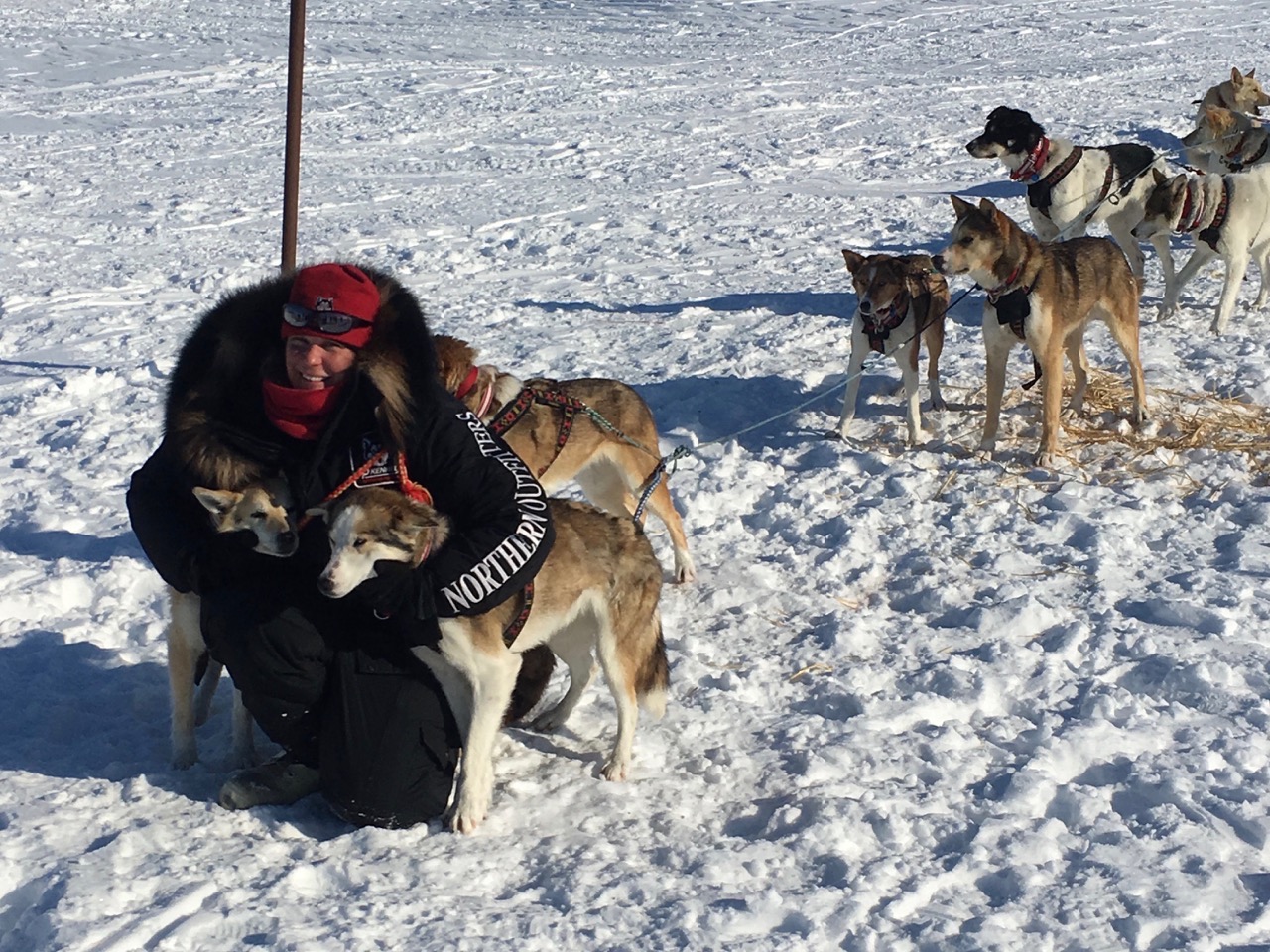
- Keep watch over the team while they are resting. Although handlers cannot touch the dogs (unless in emergencies i.e. loose team or dog fight) or speak to them, we can still show our love and support for them by keeping them safe and in our sights while they are at a checkpoint.
- Spend time with our musher while he is awake – eat a meal with him, ask about the race, show him where he can dry his mitts and socks and where to sleep.
When the team leaves:
- Help the team leave their camp spot to the check-out area
- Clean up the camp site! This is a critical part of the race and the reason a handler is mandatory in the Quest. The logistics teams work hard in the communities the race visits, building relationships and getting necessary permissions to use land and facilities. Handler teams do their bit by ensuring every bit of trash and debris is cleaned up. We rake up the straw, dispose of poop and trash, claim back return items from drop bags and try to leave the site as we found it.
- Check-out with the Checkpoint Manager
Returned Dogs:
- If one of our canine team members can not longer continue with the race it is the handlers who will take charge of them until we can bring them home to the kennel. We get support and advice from the vet team in the checkpoints. In remote access areas such as Scroggie Creek or Eagle any returned dogs will be flown to the next checkpoint and wait with the veterinarian team for the handlers to arrive and care for them.
Dawson City is a completely different kettle of fish. It is what sets the Yukon Quest apart for any other race in that for 36 hours the handler crew has complete access to the team, the sled and drop bags. Aliy, Bridgett and Jeff will take charge of the dogs for this time and we have an hour by hour schedule set up for feeding, massage, sleeping and walking to give them the best chance to rest and recuperate ready for the next 500 miles. I will tell you more about that later.
We also dry out Allen’s sled and gear and are able to make any necessary repairs. The local businesses in Dawson have been visited for everything from needle and thread to a spare plutonium-powered nuclear fission reactor for the Flux Capacitor on the sled. (Yes, I did google “flux capacitor fuel” so goodness knows what kind of targeted advertisements I will get now lol – Moira)
Thanks to all the hardworking handler teams! Have a great race and we’ll see you out there!
 The trail from Central to Circle can be a frustrating one for mushers and dogs. They spend hours and hours on Birch Creek which winds and meanders for around 50 miles and can become a bit monotonous.


 After Mile 101, the next peak is Eagle Summit. Another huge climb to an elevation of 3,652ft. In this direction the steepest face is when the team is heading down with a gee (right turn) soon after the steepest part.